Solar System
The Sun, the planets and the Moon where they are now, with their textures, orbits and spins. Pick a date or press Play, pick a body below to fly to it and follow it, and drag to turn the view, scroll or pinch to zoom, and right-drag to move.
Loading three.js. If this note stays, the browser could not load or start it (WebGL may be switched off: Settings > System > "Use graphics acceleration when available").
Diameters & Distances
I found a nice table with a good summary of the planets here. I rescaled everything though, so I can see the different planets together. I divided the planet's diameter by Earth's radius. I also applied a cubic root to the distance to make them more linear. The result can be seen in this table:
| Planet | Diameter | Distance | New Radius | New Distance |
|---|---|---|---|---|
Sun | 1391900 | 0 | 109.24 | 0.00 |
Mercury | 4866 | 57950000 | 0.38 | 386.98 |
Venus | 12106 | 108110000 | 0.95 | 476.38 |
Earth | 12742 | 149570000 | 1.00 | 530.82 |
Mars | 6760 | 227840000 | 0.53 | 610.77 |
Jupiter | 139516 | 778140000 | 10.95 | 919.78 |
Saturn | 116438 | 1427000000 | 9.14 | 1125.83 |
Uranus | 46940 | 2870300000 | 3.68 | 1421.16 |
Neptune | 45432 | 4499900000 | 3.57 | 1650.95 |
Pluto | 2274 | 5913000000 | 0.18 | 1808.30 |
Moon | 3500 | 384000 | 0.27 | 72.68 |
The Textures
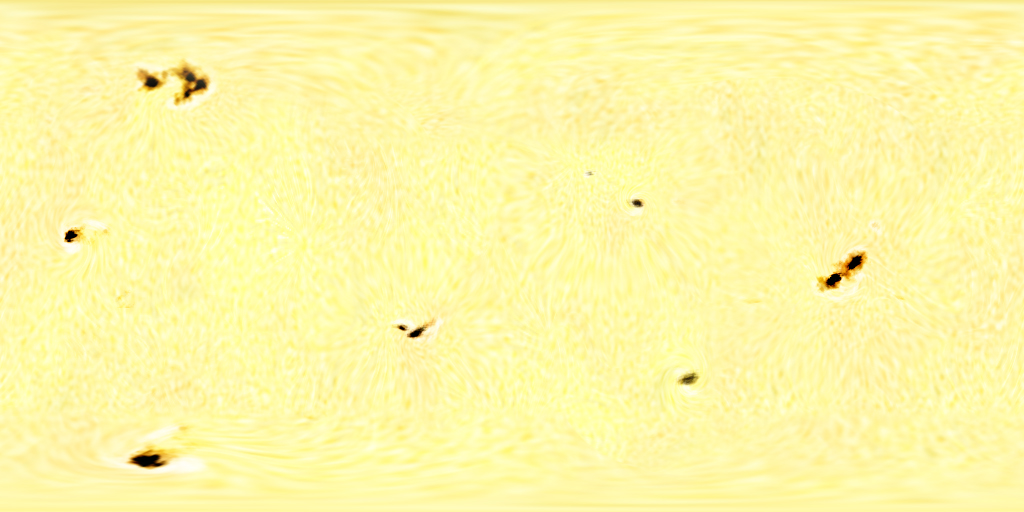
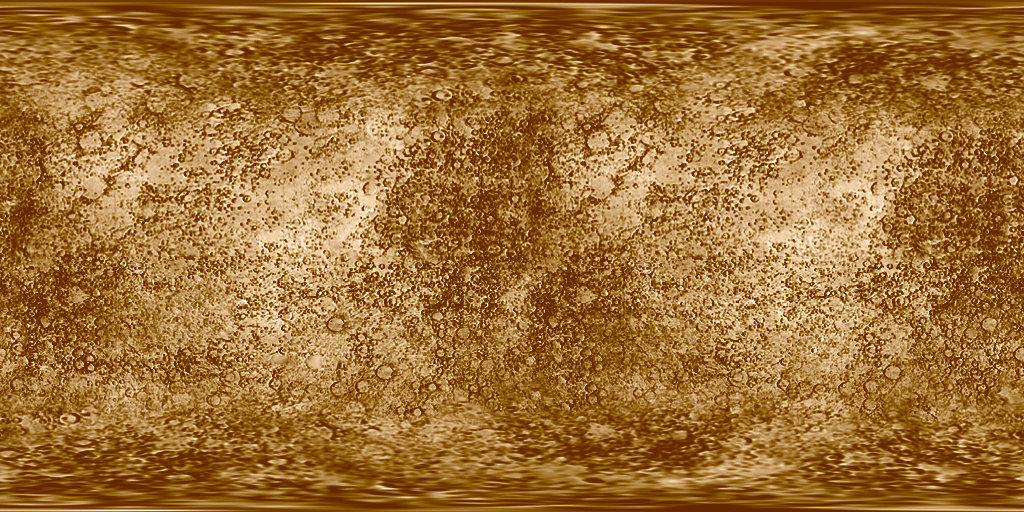
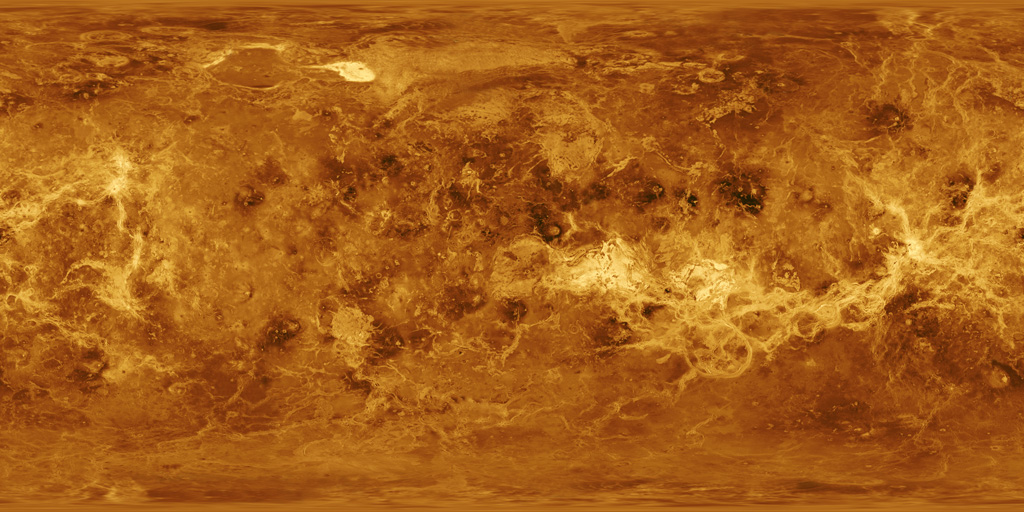
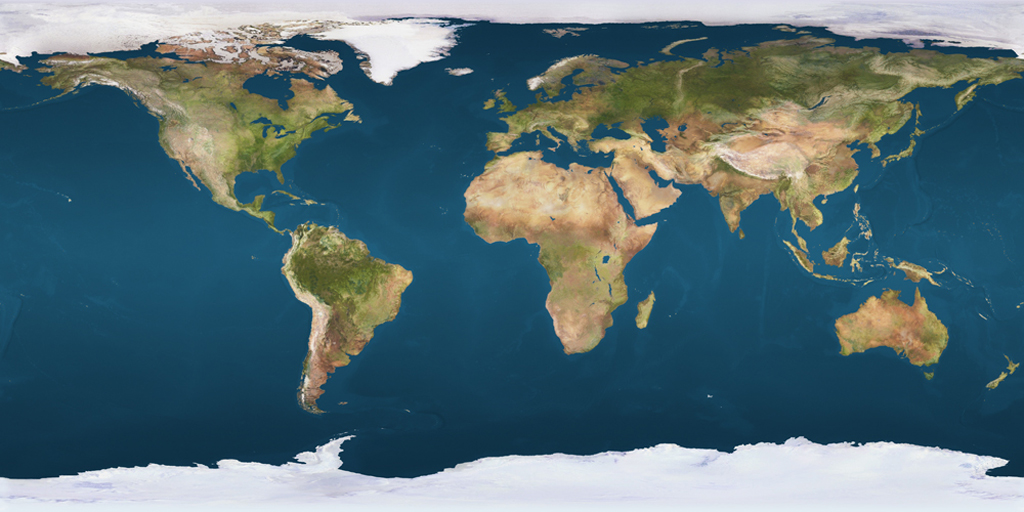
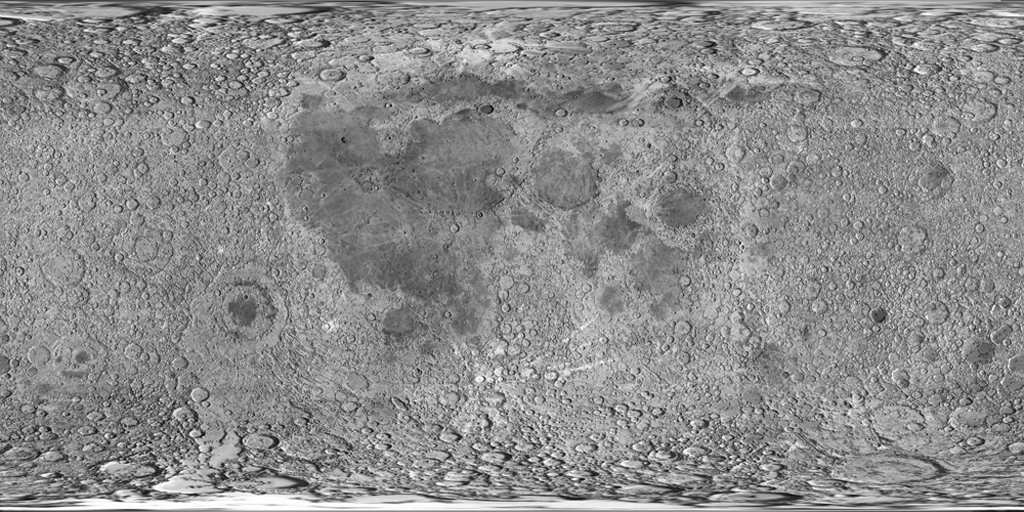
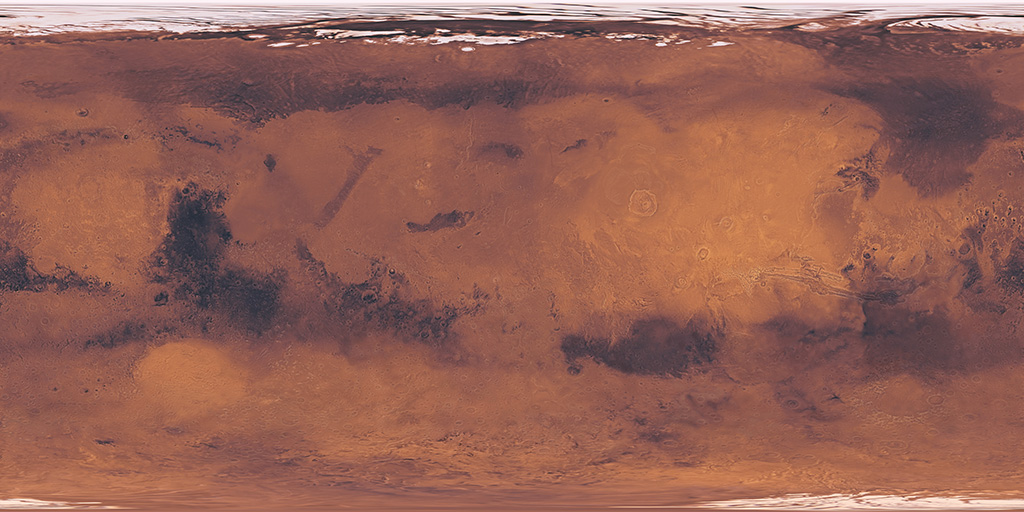
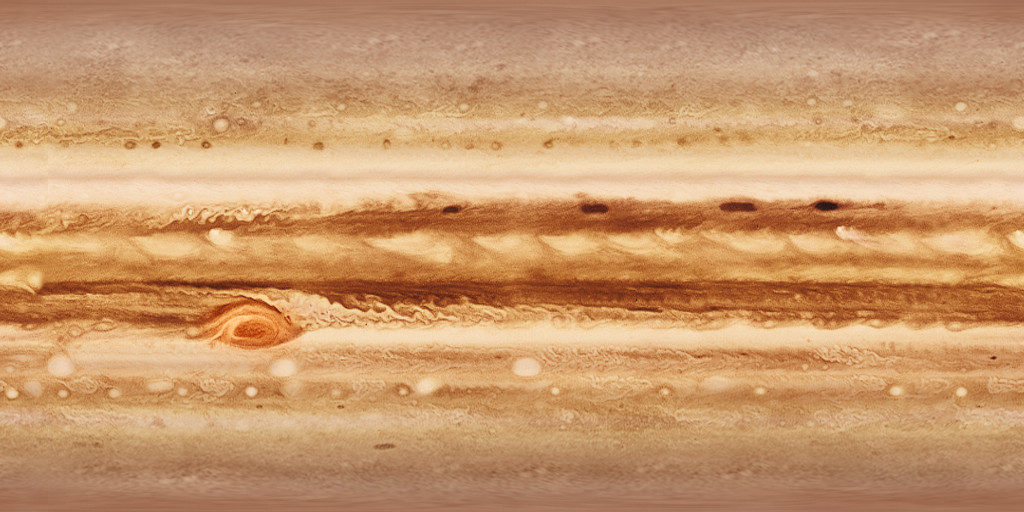
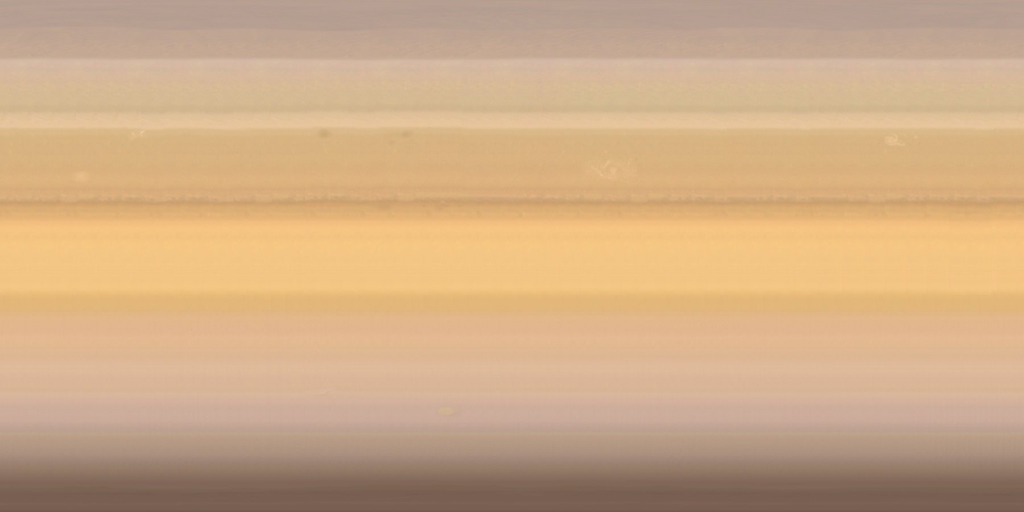
I found some textures here. I scaled some of them, so the resolution is always 1024 × 512.
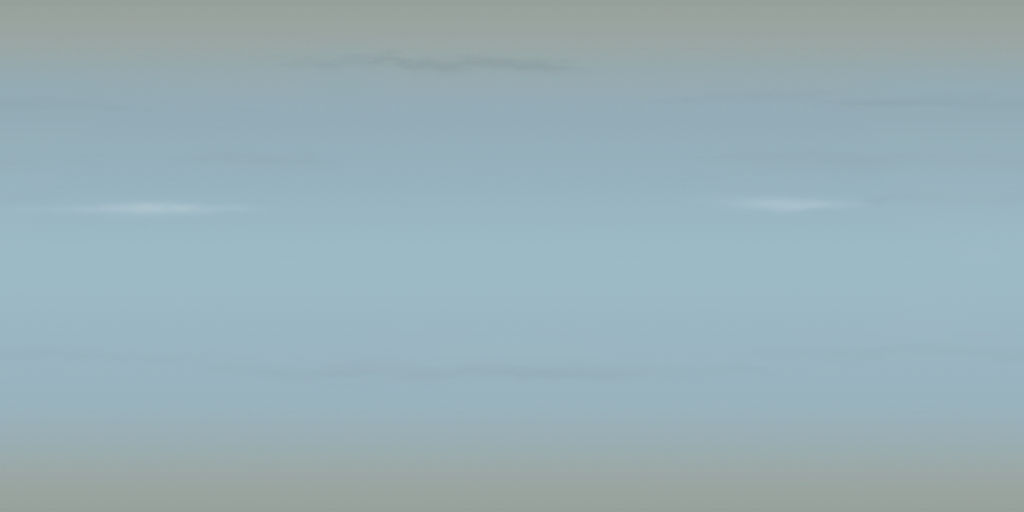
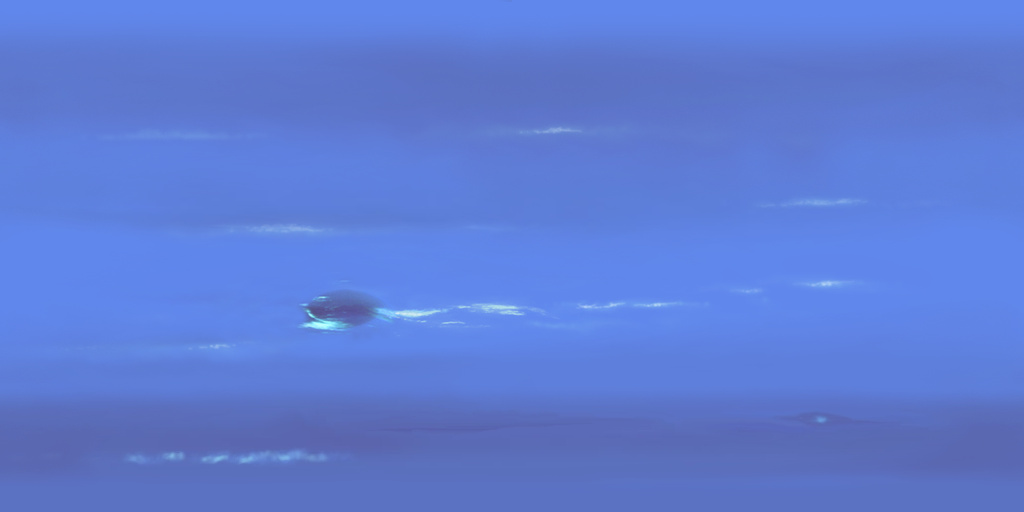
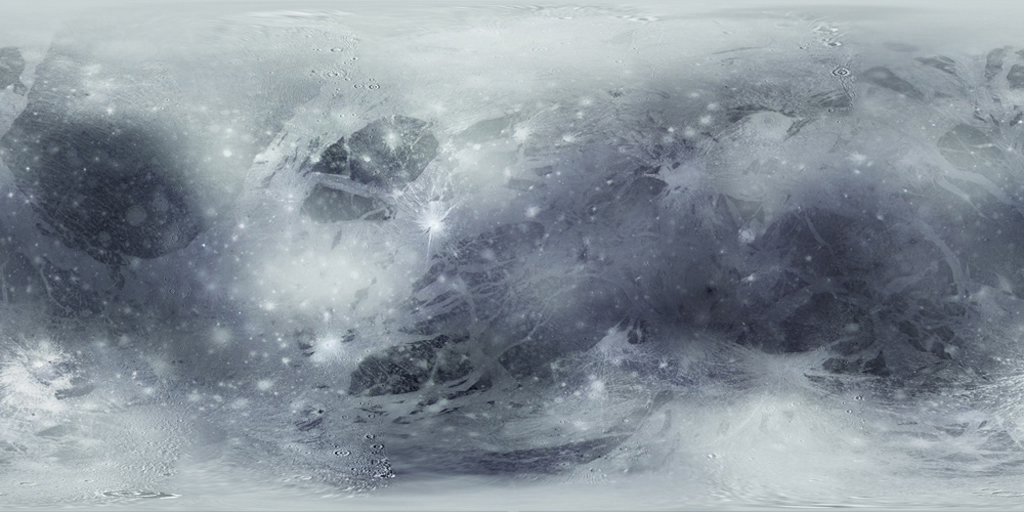
The Model
This is the three.js version of my 2008 VRML solar system, and it fixes what the VRML one got wrong, which was the planets' time: there every planet went round in the same hour and spun once a second. Here every body is where it really is at the date and time you pick (now, at first): the planets are placed from their orbital elements (JPL's, the same as on the Night Sky page, checked against a reference to within a tenth of a degree), each orbit is the real ellipse, tilted to the others as it really is (Pluto's by 17 degrees), the Moon stands in its real direction from the Earth on its tilted orbit with its near side toward us, and the Earth is turned by the real time of day, so the half in daylight is the real one. The other bodies turn on their axes in their real days, backward for Venus, Uranus and Pluto, with the axes tilted the way they really are (Uranus lies on its side). Every body is a UV sphere of the Procedural Shapes page wearing its texture, and the Sun is drawn without lighting and is the light for the rest, so the planets have a dark side. Saturn has rings, a transparent strip drawn for the purpose (there was no picture of them) with the faint C ring, the bright B ring, the Cassini division and the A ring. Distances are the cube roots of the real ones (the table above), point by point, so an orbit keeps its direction and tilt but is rounder than it really is; the planets are enlarged (the Planet size slider; the Moon's distance grows with it) because at their true size they would be smaller than a pixel, so a small dot also marks each one. Speed is a log slider, from a fraction of a day per second to years per second.
The stars behind are the 5,044 stars of the Night Sky page, with the same brightness and colors, and its Milky Way, constellation lines and borders, Messier objects and the names of the bright stars, all put infinitely far away, so they stay put as you fly between the planets. The sky is turned so that the planets' orbits lie in the ecliptic, the Sun's path through the zodiac constellations, and since the planets stand where they really are, the constellation behind a planet seen from the Earth is the one it is really in.
This page was created with Claude Code.